
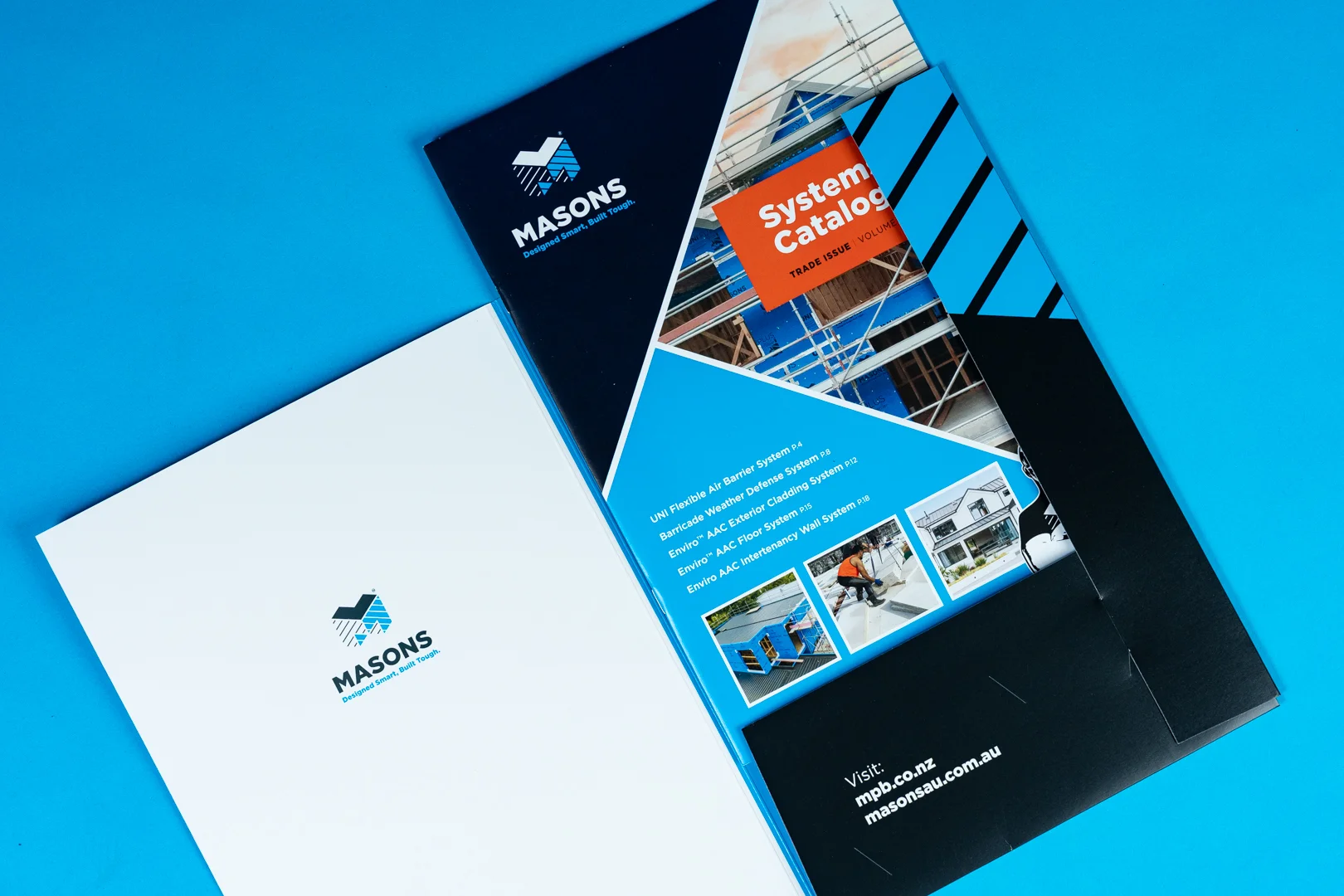
Custom Brochure Printing : The Complete Guide for NZ Businesses
A brochure is often the first physical impression your business makes. It sits on a reception desk, gets handed to a prospect at a trade show, or arrives in the post as part of a carefully planned campaign. Done well, a professionally printed brochure builds trust and drives action. Done poorly, it quietly undermines everything your brand stands for.
The options for custom brochure printing are wide, but the quality gap between providers is significant. Knowing what separates a great result from a disappointing one, before you place your order, can save you both money and stress.
At MC2, based in Rosedale, Auckland, we work with marketing managers, small business owners, and brand teams across New Zealand and globally to deliver print results that are consistent, professional, and genuinely worth handing over. This guide covers everything you need to know about custom brochure printing, from paper selection to folding formats, finishes, and how to get your colours right every single time.
Table of Contents
Why Brochures Still Matter in a Digital World
Despite the rise of digital marketing, print remains one of the most trusted communication formats. A physical brochure engages multiple senses, it has weight, texture, and permanence that a digital ad simply cannot replicate. Research consistently shows that people retain information better when they read it in print compared to on a screen.
For businesses operating in competitive sectors like real estate, professional services, hospitality, or retail, a well-crafted brochure reinforces credibility. It signals that you invest in quality, and that attention to detail extends to how you deliver your services.
Custom brochure printing remains one of the highest-return investments in a physical marketing toolkit. When the print quality is right, a brochure keeps working for your brand long after the initial campaign has ended.
Choosing the Right Paper Stock for Your Brochure
Paper choice is one of the most impactful decisions you will make in the brochure printing process, and it is often the most misunderstood. The weight, coating, and texture of the paper you choose will shape how your audience perceives your brand before they have read a single word.
For most standard brochures, a coated stock in the 130gsm to 170gsm range delivers a good balance of quality and cost-effectiveness. Coated stocks are ideal when your brochure includes photography or detailed graphics, as the coating prevents ink from being absorbed into the paper fibre, producing sharper, more vibrant imagery.
Silk, Gloss, and Uncoated Stocks Explained
Silk-coated stock is the most popular choice for brochure printing projects. It offers a smooth, low-sheen finish that is easy to read under most lighting conditions, without the glare associated with high-gloss paper. Gloss stock delivers vivid, punchy colour and is well-suited to product-led brochures where bold visuals are the hero.
Uncoated stock gives a more natural, tactile feel and is preferred by brands that want to communicate authenticity, sustainability, or a premium editorial quality. Think architecture firms, boutique hospitality venues, or organic product businesses. Your MC2 print consultant can walk you through physical samples so you can feel the difference before committing.
Heavier Stocks for a Premium Impression
If your brochure needs to make a strong impression, for example at a product launch, in a premium retail environment, or as part of a high-value sales proposal, consider stepping up to a 200gsm to 350gsm stock. At this weight, a brochure starts to feel more like a booklet or catalogue, lending it a sense of permanence and quality.
Heavier stocks are particularly effective when combined with special finishes, which we cover in the next section. The additional investment in paper weight nearly always pays off in how your audience responds to the material.
Finishes and Special Effects That Elevate Your Brand
The finish applied to your brochure is what transforms a standard printed piece into something that genuinely stands out. The right finish can mean the difference between a brochure that gets kept and one that gets discarded.
Lamination is the most common finish and comes in matte, gloss, or soft-touch (velvet) options. Matte lamination provides a refined, non-reflective surface that is excellent for text-heavy brochures. Soft-touch lamination adds a luxurious, almost velvety texture that feels exceptional in the hand and is increasingly popular with premium lifestyle and property brands.
Spot UV, Foil Stamping, and Embossing
For brochures that need to make an immediate visual impact, spot UV coating selectively applies a high-gloss varnish to specific elements, such as your logo, a headline, or a key image. The contrast between the matte laminated background and the high-gloss spot UV creates a striking tactile and visual effect.
Foil stamping and embossing are at the premium end of the spectrum and are particularly effective on brochure covers. These finishes are frequently used in industries where perceived value is critical, including finance, luxury real estate, legal services, and high-end hospitality. MC2 manages these more complex finishing processes with careful quality oversight, so the results are consistent across your entire print run.
Folding Options and Format Choices
The format and fold of your brochure determines how your audience engages with your content. A poorly chosen format can make even excellent content feel disjointed, while the right fold creates a natural reading journey through your message.
The most widely used format is the standard DL (one-third A4) tri-fold, which fits neatly into a standard envelope and is ideal for service overviews, event information, or menus. It is cost-effective, familiar to audiences, and easy to distribute in bulk.
For campaigns that need more real estate, an A4 or A5 bifold (simple half-fold) gives you four clear panels to work with, offering more space for imagery and content without increasing complexity. These are commonly used for property listings, product showcases, and corporate capability statements.
Z-Folds, Gate Folds, and Concertina Options
When your content calls for something more distinctive, MC2 can produce z-fold (zigzag), gate fold, and concertina (accordion) formats. Gate fold brochures, where two outer panels open from the centre, create a reveal effect that is particularly powerful for product launches or premium brand campaigns.
Concertina folds are popular for maps, timeline-based content, or step-by-step guides because the format naturally accommodates sequential information. These specialty folds require precise production management to ensure alignment is exact across every panel, which is where having a knowledgeable print partner makes a genuine difference. Much like our work on complex projects such as custom game printing in NZ, multi-panel brochures demand tight quality control at every production stage.
Colour Consistency and Quality Control
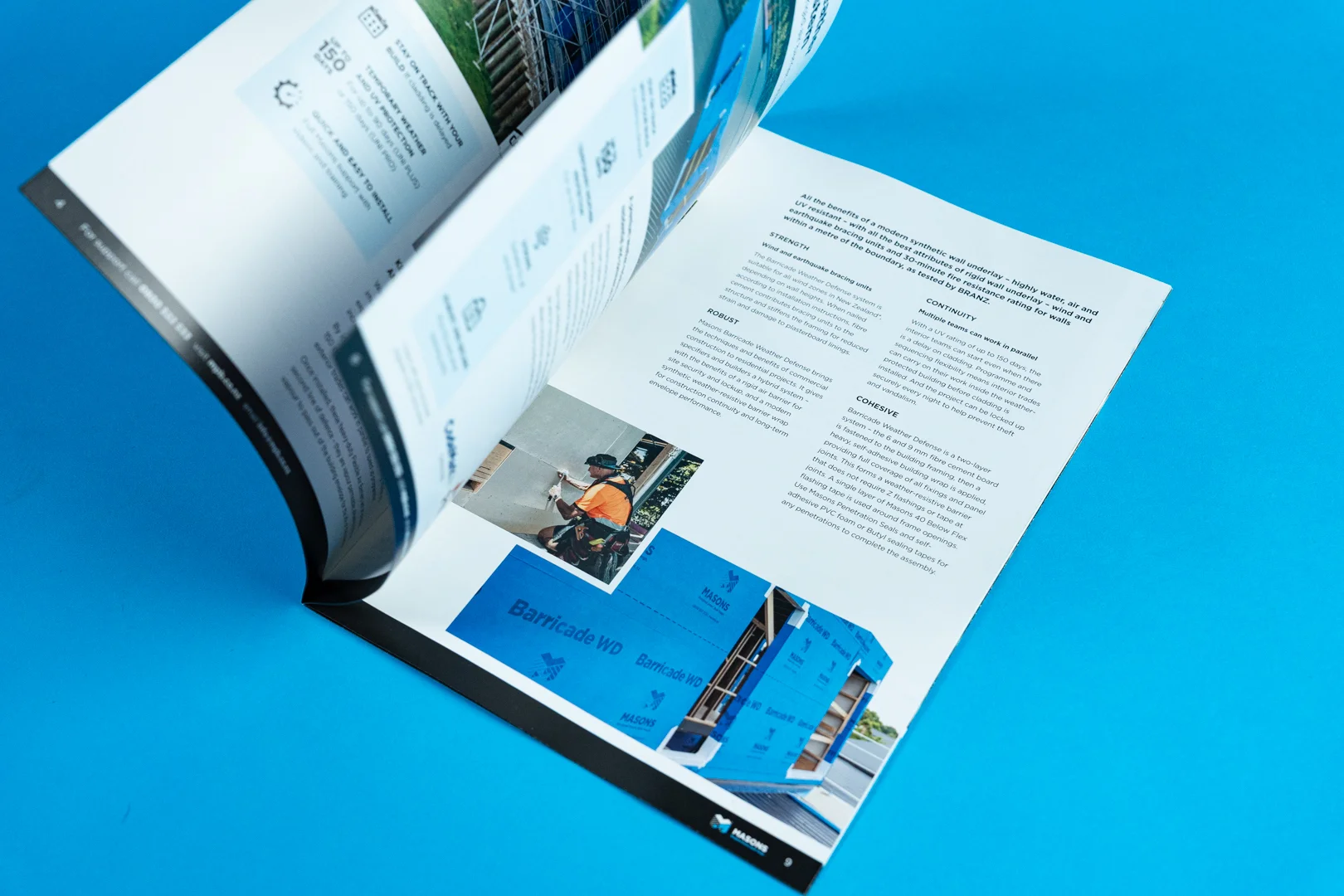
One of the most common pain points we hear from businesses about previous print experiences is inconsistent colour. A brand that looks vibrant and confident on screen can arrive printed looking flat, dull, or noticeably different from expectations. This is not just frustrating; it actively damages your brand credibility.
Colour inconsistency in brochure printing typically stems from a few root causes. Files supplied in RGB rather than CMYK, insufficient colour profiling by the printer, or the use of equipment that has not been properly calibrated are all common culprits. At MC2, we review your files before they go to press and flag any issues that could affect colour output.
If your brand has specific Pantone colours, we can discuss the best approach to achieve the closest possible match within your budget. For businesses with strict brand guidelines, even small deviations in colour can be significant. That attention to colour accuracy is part of what makes professional print management so valuable.
The same precision we bring to brochure work applies across all printed materials. If you are also producing large-format displays for your campaign, our guide to custom poster printing sizes, finishes and how to get it right is worth reviewing alongside this article.
Print Run Considerations: How Many Should You Order?
One of the most practical questions for any business considering custom brochure printing is how many to order. Print economics reward volume: the unit cost per brochure drops significantly as quantities increase because setup and press costs are spread across a larger run.
For short runs of 250 to 500 brochures, digital printing is the most cost-effective and flexible option. Digital print allows for faster turnaround, lower minimum quantities, and even variable data printing, where personalised details can be incorporated into individual brochures. It is ideal for targeted direct mail campaigns or niche audiences.
For runs of 1,000 brochures and above, offset printing typically delivers superior colour accuracy and a lower cost per unit. Offset is the method of choice for high-volume distribution, trade shows, retail environments, and annual reporting materials. The quality ceiling is higher, and the consistency across the full print run is exceptionally reliable.
When you are unsure of the right quantity, a conversation with the MC2 team can help you weigh up the economics and plan a print run that fits both your budget and your distribution strategy. Ordering too few and reprinting is almost always more expensive than ordering slightly more upfront.
Offshore Printing vs. Local Expertise
The allure of offshore printing, particularly from large Asian print hubs, is understandable. Lower unit costs look attractive on paper. But for many businesses across New Zealand and beyond, the experience of using offshore printers has come with real costs that were not visible in the original quote.
Shipping times, customs delays, and the inability to review physical proofs before a full print run are significant risks. When a brochure arrives with the wrong colour, an alignment issue, or paper that does not match what was ordered, there is very little recourse when your supplier is operating across a different time zone and legal jurisdiction.
Working with a local print partner means you can request physical proofs, communicate directly and promptly, and have confidence that someone is genuinely accountable for the outcome. At MC2, we are based in Rosedale, Auckland, and we service clients across New Zealand and internationally. That proximity and accessibility matter when deadlines are tight or when something needs to be resolved quickly.
The same principle applies across all specialist print projects. Whether you are producing brochures or something more complex like a children's book, local expertise and hands-on quality oversight consistently deliver better results than rolling the dice on an offshore provider you have never met.
According to Statistics New Zealand, small and medium businesses make up the vast majority of NZ enterprises. For these businesses, getting print right the first time is not just about aesthetics; it is about protecting tight marketing budgets and maintaining brand trust with customers who expect professionalism.
Frequently Asked Questions
What is the minimum order quantity for custom brochure printing?
At MC2, we can accommodate short runs starting from as few as 250 brochures using digital printing. For larger volumes of 1,000 or more, offset printing becomes the more cost-effective and quality-consistent option. We will recommend the best method based on your quantity and budget.
How long does custom brochure printing typically take?
Turnaround times vary depending on the complexity of the job, the finish required, and the print run size. Standard digital brochure printing can often be completed within three to five business days once print-ready files are approved. Offset runs or jobs with specialty finishes like foil or embossing will require additional lead time, which we will confirm at the quoting stage.
What file format should I supply for custom brochure printing?
We recommend supplying print-ready PDF files with all fonts embedded, images at a minimum of 300dpi, and artwork set up in CMYK colour mode with 3mm bleed on all edges. If you are unsure whether your files meet these specifications, our team can review them before production begins to flag any issues early.
Can MC2 help with brochure design as well as printing?
While MC2's core expertise is in print production and management, we work closely with trusted design partners and can advise on layout, paper choice, and format during the briefing process. If you have an existing designer, we are happy to work directly with them to ensure the artwork is set up correctly for print.
What are the most popular paper stocks for custom brochure printing?
The most frequently requested stocks for brochure printing are 150gsm silk coated for general marketing brochures, and 170gsm to 200gsm gloss or matte for premium applications. Soft-touch laminated covers on heavier stocks are increasingly popular among businesses wanting to make a strong first impression. We always recommend requesting a physical sample before committing to a final paper selection.
Get Started with Custom Brochure Printing
A professionally produced brochure is one of the most enduring and effective marketing tools available to businesses worldwide. When the paper, finish, format, and colour are all working together, it communicates quality in a way that no digital asset quite can.
Whether you need a short-run digital brochure for a targeted campaign, a high-volume offset print for national or international distribution, or a premium foil-finished piece for a flagship launch, MC2 has the expertise to deliver it properly. We are Auckland-based and work with clients across New Zealand and globally.
Custom brochure printing is what we do. We manage the process end to end, from file review and paper selection through to finishing and delivery, so you can focus on your business with confidence that your print is in good hands.
Get in touch with the MC2 team today to discuss your brochure project. We are based at 28 Constellation Drive, Rosedale, Auckland, and we work with businesses across New Zealand and around the world.
MC2 Print: maria@mc2.co.nz | 021 824 933