
250 x business cards – digital print, 4 colours, 2 sides on stock 350gsm satin matt or gloss art, plus 500 x DLE flyers (99mm x 210mm), 4 colours, 2 sides on 150gsm satin matt or gloss art, only $ 220.00 + GST
Or 500 x business cards digital print 4 colours 2 sides on stock 350gsm satin matt or gloss art, plus 1000 x DLE flyers (99mm x 210mm), 4 colours, 2 sides on 150gsm satin matt or gloss art, only $ 250.00 + GST
From print ready PDF supplied to MC2 specifications – this offer is valid until the end of the financial year March 31st 2016.
Design is a complex and multilayered industry, and just as good design begins about ten steps before pen actually hits paper (or tablet, as it were), neither does it end when the final digital proofs are approved and delivered. The actual implementation of the design must be treated with considerable thought and care as well, if you’re interested in gaining maximum effect from the design itself. The most common implementation questions we come across are often in regards to printing… what finishes to use, what stock, and most often, should we use digital or offset printing?
In the past decade, digital printing has benefited from a surge in popularity… due to a combination of increased affordability, technical advancements, and the availability of more options than were previously possible in digital print. Literally hundreds of new digital print companies have opened their doors online, making commercial print solutions more readily available to everyone. That said, this growth in popularity has also caused quite a bit of confusion for those not “in the biz”, and a few unscrupulous (or plain inexperienced) companies are taking advantage of this confusion… resulting in a large proportion of print consumers walking away with a product that does not meet their needs.
An understanding of the advantages and disadvantages of digital printing versus those of traditional offset lithography, is crucial in making the right choice in your printing company.
MECHANICAL PROCESS
OFFSET: Offset lithography is the most commonly trusted high volume commercial printing technology. In offset printing, the design image is first burned onto a plate, and is then transferred (or offset) from the plate to a rubber sheet, and finally to the printing surface. The lithographic process is based on the repulsion of oil and water. The image to be printed gets ink from ink rollers, while the non printing area attracts a film of water, keeping the non printing areas ink-free.
DIGITAL: If you have a desktop printer at home, you’re likely already familiar with the mechanical process of digital printing. Many of the mechanical steps required for offset printing are eliminated (namely, making films and color proofs, manually stripping the pieces together, and making plates), which results in a much more affordable print solution.
ADVANTAGES OF DIGITAL & OFFSET METHODS
DIGITAL ADVANTAGES:
In general…
1. Shorter turnaround
2. Lower costs for very small print runs
3. Availability of variable data printing (database driven, e.g. mailing lists)
OFFSET ADVANTAGES:
In general…
1. Higher image quality, higher resolution and no streaks/spots.
2. Works on a wide range of printing surfaces including paper, wood, cloth, metal, leather, rough paper and plastic.
3. The unit cost goes down as the quantity goes up.
4. Quality and cost-effectiveness in high volume jobs.
5. Many modern offset presses use computer-to-plate (as opposed to the older computer-to-film system) further increasing quality.
HOW TO DECIDE?
Use this checklist to help decide:
[ ] Quantity
Offset printing has a front-end cost load, which means short runs (low quantities) may have a high per-unit cost. But as quantities increase, the unit cost goes down with offset printing. Very short runs can be more cost effective with digital printing; while larger quantities are likely to have a lower unit cost with offset printing.
[ ] Printing Medium
Do you need or want a special paper, finish or unusual printing surface, or unique size? The options are getting better for digital, but offset printing still offers the most flexibility.
[ ] Colour
Digital presses use four-colour process (CMYK) printing. If you need only black ink or one or two ink colors, offset printing may offer a more cost-effective solution. If you need four-color printing, digital may offer advantages in lower up-front costs. That said, a few progressive modern offset printing companies are now offering rich full-colour printing, with no added plate/setup fees for additional colours.
[ ] Pantone®
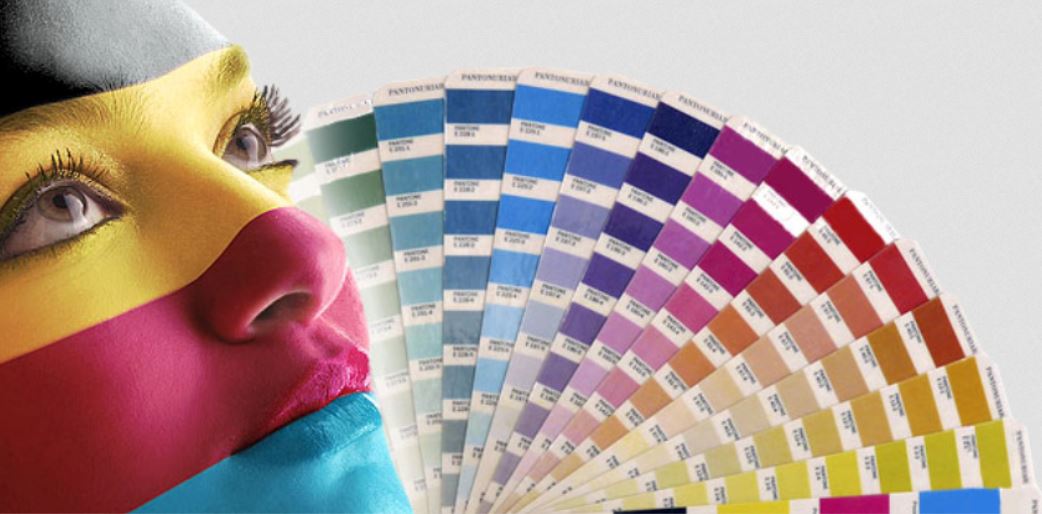
If you’re planning to print using the Pantone® Matching System, offset printing will give you the best match, since it uses actual Pantone® ink. Digital printing simulates the color using a four-color matching process, so some digital printers may offer less accurate color matching on projects.
[ ] Turnaround
If you need it fast, digital usually offers quicker delivery. Again though, a few select offset print houses are now offering print turnaround in as short a timeframe as 24 hours.
[ ] Proofing
Digital offers more accurate proofs, since what you see is an actual sample of the printed piece, printed using the exact process as the intended run. For offset printing, if you need hard proofs, stringently accurate colour proofing can become expensive.
[ ] Customization
With the ease of database driven variable data printing, digital printing offers the most affordable way to customize marketing materials, direct mail pieces, letters, etc. with a different name/address or number/code on each printed piece.
OFFSET PRINTING vs DIGITAL, A SUMMARY
Digital printing can be the ideal solution for some people, but in our experience, computer-to-plate offset lithography (combined with respectably high quality stock and finishing) always yields the superior result in print quality. The trick then becomes finding the right partner.
Over the years, we have sampled the services of dozens of local and global print houses, and have painstakingly hand-picked a small selection of partners who put out consistently high-quality product, on time and in budget… with whom we have since developed trade agreements. Not everyone is able to invest this sort of research into choosing the right print partner, but to ensure the best results, we would strongly suggest that you follow these minimal steps:
1. Leave Nothing to Chance
Be very specific with your print company when communicating which stock you want used, which colours, which process (digital vs offset) and what sort of finishing or coating you want on your cards.
2. Get Samples
Before initiating your print project, request samples from your prospective print companies. All reputable print houses have a standing offer of free samples expressly for this purpose.
3. Proof
If you are managing your own print project, and are working with a local firm, be sure to request a pre-press proof before authorizing the full run. This will allow you to confirm that the company understood your specific instructions outlined in item 1 above. It will also allow you a hands-on preview of the final product, so you can catch any imperfections ahead of time. If you are working with a remote partner, be sure to request a digital proof… while this requires an element of trust in terms of the stock and finish, a digital proof will allow you to ensure all visuals are to spec.
In the end, a good design cannot fully live up to its potential when run on a shoddy print job. If you are as careful and selective in choosing a print partner as you were in choosing a design firm, you can ensure that the physical product that actually reaches your partners or customers is of the highest possible quality.
Because all things considered, high quality is precisely the message you want to deliver.
Sage Media is an international corporate design firm based in Ottawa, Ontario.
In spite of all the technology changes underfoot, the offset printing process is still used for applications that range from commercial to packaging to direct mail. While each of these markets face their own challenges, there are some similarities, most notably the need to add digital capabilities to stay competitive. The influence of digital technologies is apparent throughout the workflow as a cost and time saving measure, and as a means to insure that a shop can deliver cutting-edge capabilities to its clients.
A recent report from Smithers Pira, “The Future of Offset vs Digital Printing to 2018,” details how the issue of direct competition between digital and offset printing is a daily occurrence for print service suppliers, specifically in determining which process they should use for a particular job.
According to the report, in 2008 the value of all digital printing accounted for less than 18.5 percent of the offset market; by 2018, however, it will be worth almost 50 percent of the offset sector worldwide, and even higher in the more mature print regions. The fact that digital’s share of offset volume is much lower reflects the higher per unit costs being obtained for digital print than for offset. The volume of all offset prints is projected to fall by 10.2 percent worldwide between 2008 and 2018, while digital print volume is forecast to grow by 68.1 percent.
Shrinking run lengths is a concern among all offset printing markets, but in the direct mail market, complex direct mail packages are helping to pump up revenues. “Many winning direct mail packages today require more operations that command a higher cost per package, which helps to compensate for the shorter runs,” says Debora Haskel, VP Marketing IWCO Direct, a leading provider of a full suite of direct marketing solutions. “Some of the price erosion for offset can be mitigated by more complex packages that drive a higher response to meet the ROI demands of our customers.”
Adds Haskell, “The magic of direct mail has always been and continues to be that response can be measured. Customers are employing sophisticated multivariate testing and more complex direct mail packages to drive response. It’s working. Clients are reporting double- and even triple-digit lift in gross response rate based on formats that we are designing for both offset and digital platforms.”
Headquartered in Chanhassen, Minnesota, IWCO Direct is knee-deep in offering paper-based direct mails services, as well as postal optimization strategies and cross-channel marketing.
“One of the largest areas of impact of the digital transformation is on our capital investment process,” notes Haskel.
“When an offset press requires a significant investment for refurbishing or upgrade, we now consider if digital technology will have a more positive impact on meeting customer needs and ultimately, on our bottom line.”
This past July, IWCO Direct expanded its direct mail personalization capabilities with the installation of an Océ ColorStream 3900 digital inkjet printer at its Chanhassen headquarters.
In May 2012, Wilen Direct, Deerfield Beach, FL, another leading direct mail house, announced a different route, installing the Kodak Prosper S10 four-color imprinting system, which uses Kodak Stream inkjet technology and Kodak Versamark CS410 system controller. The hybrid printing solution gives Wilen the ability to provide personalized direct mail at speeds matching those of its web offset presses and finishing lines. Wilen uses the Pitney Bowes Print+ Messenger color inkjet aystem to create individually customized envelopes.
Personalization, however, is just one of the reasons direct mail houses are looking toward digital. The marrying of technologies such as QR codes and augmented realty with paper direct mail campaigns is also making digital more attractive.
DTS Output, El Dorado Hills, CA, part of the Customer Communications Segment of DST Systems, Inc., produces and delivers its trade confirmations and broker-dealer, bank, and tax statements, in addition to offering fulfillment, direct mail, and warehouse distribution services. The scope of what this segment produces is in the numbers: in 2012, it produced more than 3.5 billion transactional communications that were received via postal, e-mail, Web, and mobile applications.
According to Dave Saavedra, Corporate Communications, DST Output, the company began moving its processes to digital 12 years ago from producing forms offset. Forms are now produced 100 percent inkjet. “Selling our our offset business had a very positive impact to our bottom line,” says Saavedra.
While DST Output doesn’t often run shells offset, “when we do, they are very competitively priced—not less than digital forms manufacturing, but getting closer,” says Saavedra.
Inkjet is compelling as customers look to shave costs off their mailings, and for shorter turnaround times. But they are also looking for higher resolutions and larger color gamuts—areas that offset often has inkjet beat. “Customers are looking for additional flexibility in terms of substraights available and different finishing options,” says Saavedra.
For IWCO Direct, the digital transformation is having an impact on workflow and technology, as it considers best practices for all platforms.
“Our platform makes use of both offline inkjet for personalization of offset production and continuous full-variable inkjet,” says Haskel. “We are making significant investments in workflow, digital asset management, and proofing solutions to support both platforms. This also requires an expansion of our content management team and training across our enterprise for our customer-facing team including creative services, client services, and sales. In other words, this is not just a change for operations and production—it impacts everyone.”
Clients, too, are looking for “best practices,” says Haskel, asking to be educated on how to optimize digital and understand how to determine which platform makes the most sense for their programs.
“Our customers want to know how to use the scope and breadth of our platform to their best advantage,” says Haskell. “They want and need education on how to design for digital and how to understand the best platform for each of their programs. They know that they must design for the digital platform in order to see the lift in response the platform promises, but many clients don’t know where to start. We are focused on providing this education through our Education Centers in Pennsylvania and Minnesota, our blog, and our business review process.”